


Foreign Fines Tracker: Governments Have Extracted $21.7 Billion (and Counting) From US Tech Firms
U.S. tech firms are subject to a growing array of discriminatory regulations and targeted enforcement actions that are framed as neutral domestic policy measures but are actually designed to constrain U.S. firms, extract resources from them, and erode their competitive advantage.
To understand the mounting costs of this trend, ITIF has compiled a database of fines that foreign governments have imposed on U.S. tech companies. The justification for these fines varies, but they amount to a significant financial burden on some of America’s most innovative firms, redirecting capital that could be invested in the research and development needed to maintain global leadership in emerging technologies.
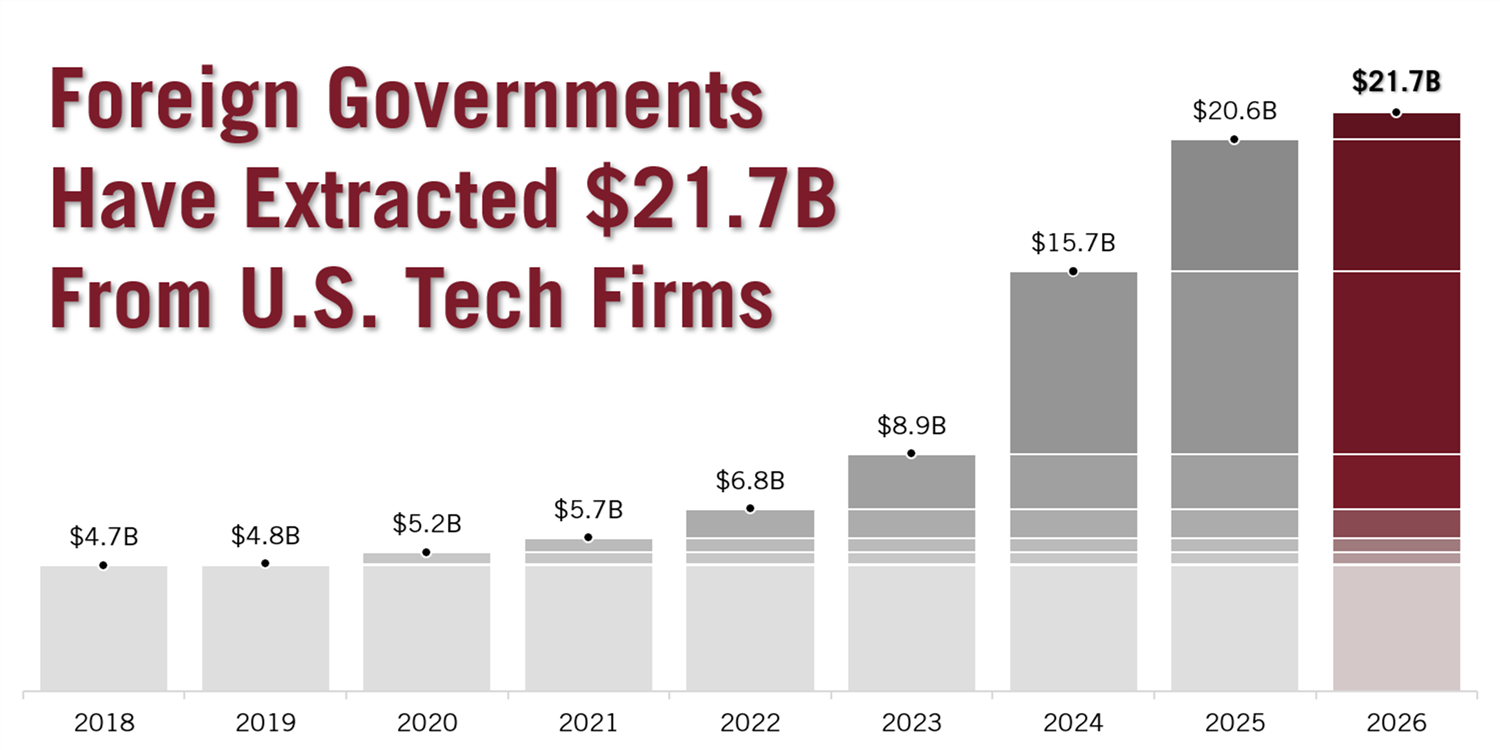
As figure 1 shows, ITIF has tracked a cumulative total of nearly $22 billion in fines.
Figure 1: Fines imposed through July 2026
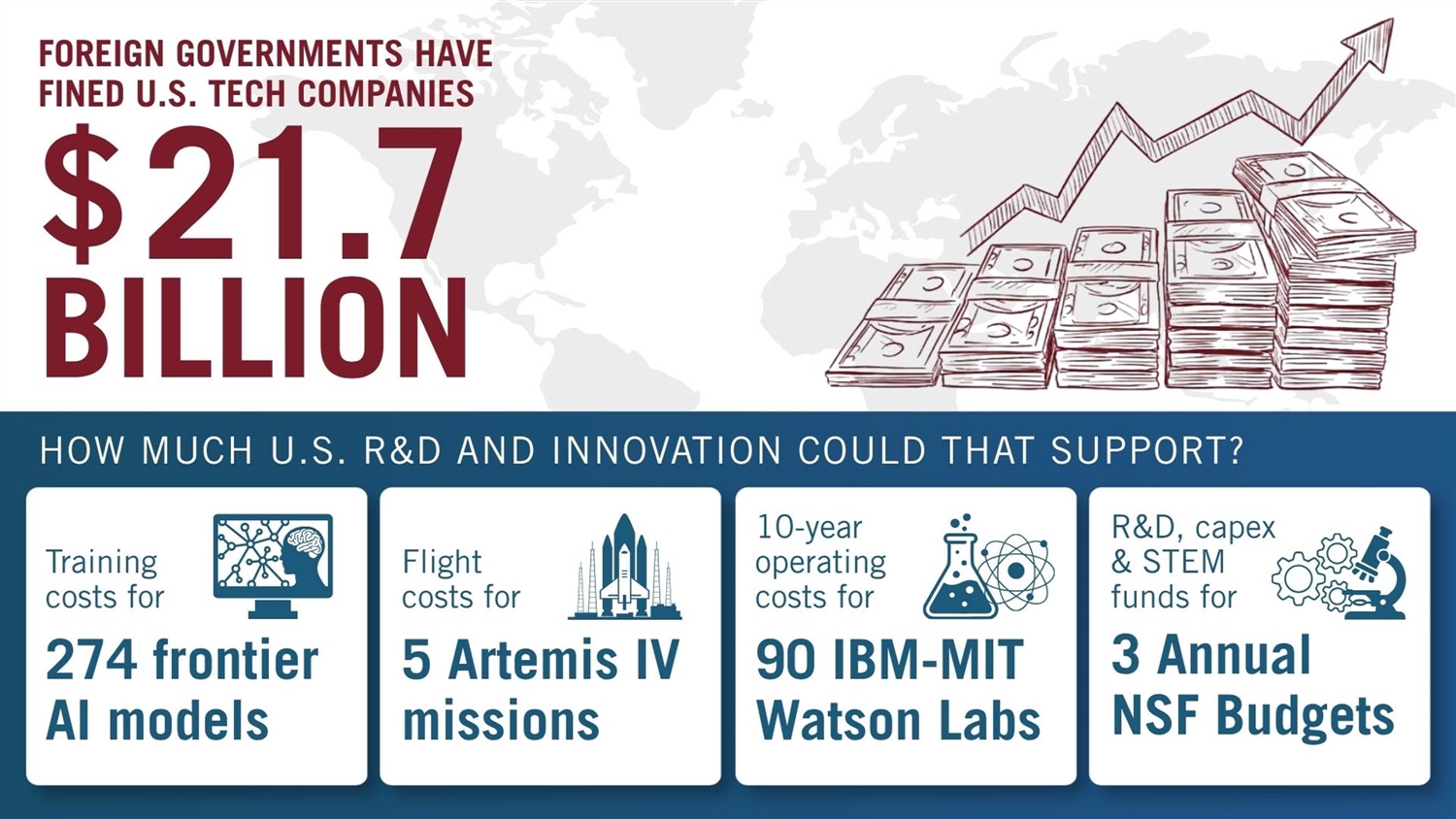
The problem with these fines—and the reason they are a national concern for the United States—is that they sap resources that otherwise could be invested in R&D and new innovations that would bolster U.S. technology leadership, as figure 2 illustrates.
Figure 2: Cumulative value of foreign fines versus equivalent investments in R&D and innovation
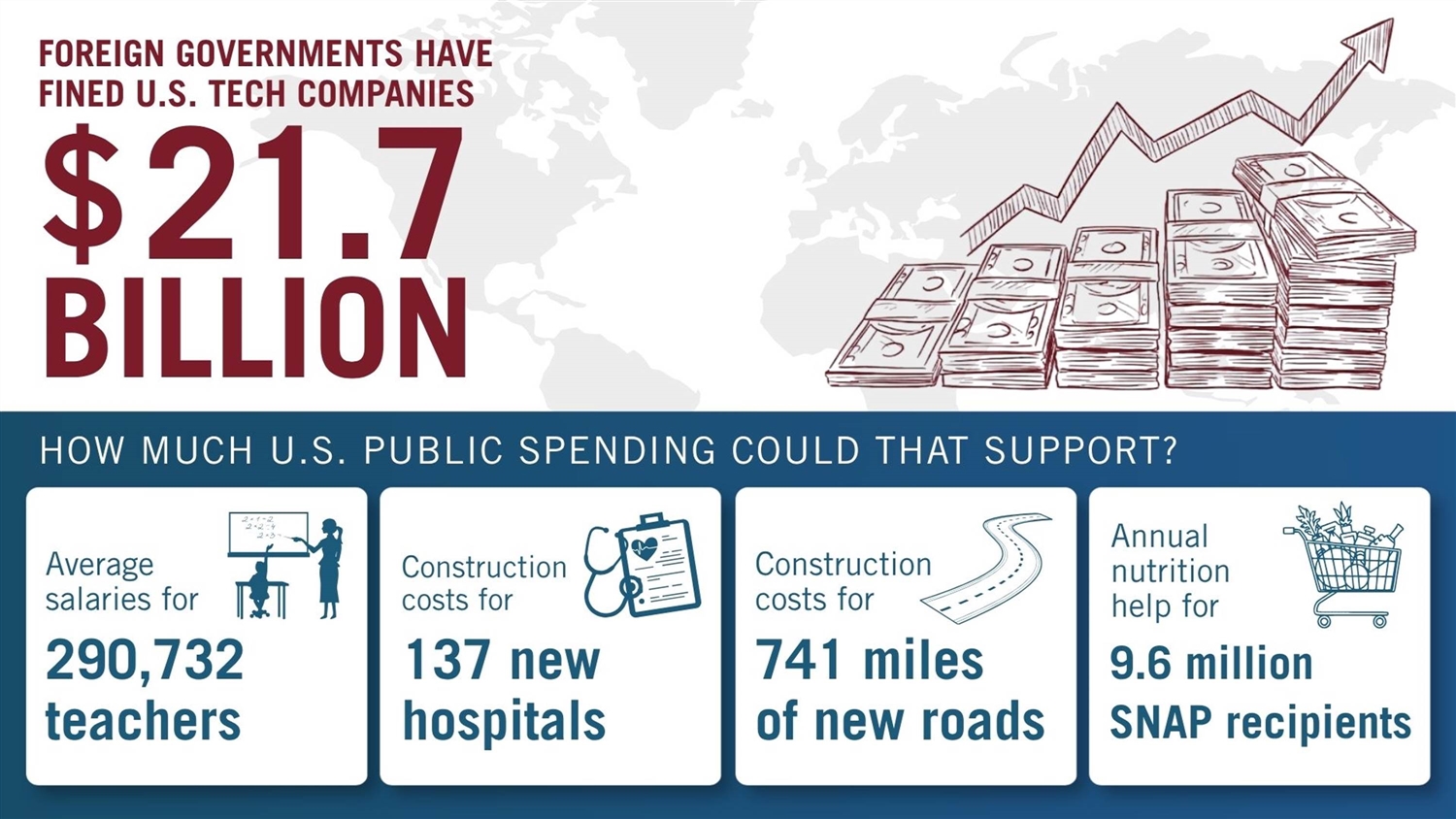
Moreover, these fines are skimming global revenue from U.S. tech companies into foreign governments’ treasuries. If the same amount had gone to the U.S. government, it could have paid for more than 290,000 teacher salaries, covered the annual cost of SNAP benefits for 9.6 million people, or underwritten the construction of 137 new hospitals or 741 miles of new roads, as shown in figure 3.
Figure 3: Cumulative value of foreign fines versus social spending priorities
The European Union and its member countries have targeted U.S. tech firms most frequently, despite the EU’s claims of being a close U.S. ally. But countries in other regions also have begun targeting U.S. firms with excessive fines—as figure 4 illustrates.
Figure 4: The spread of fines targeting U.S. tech companies, July 2018–July 2026
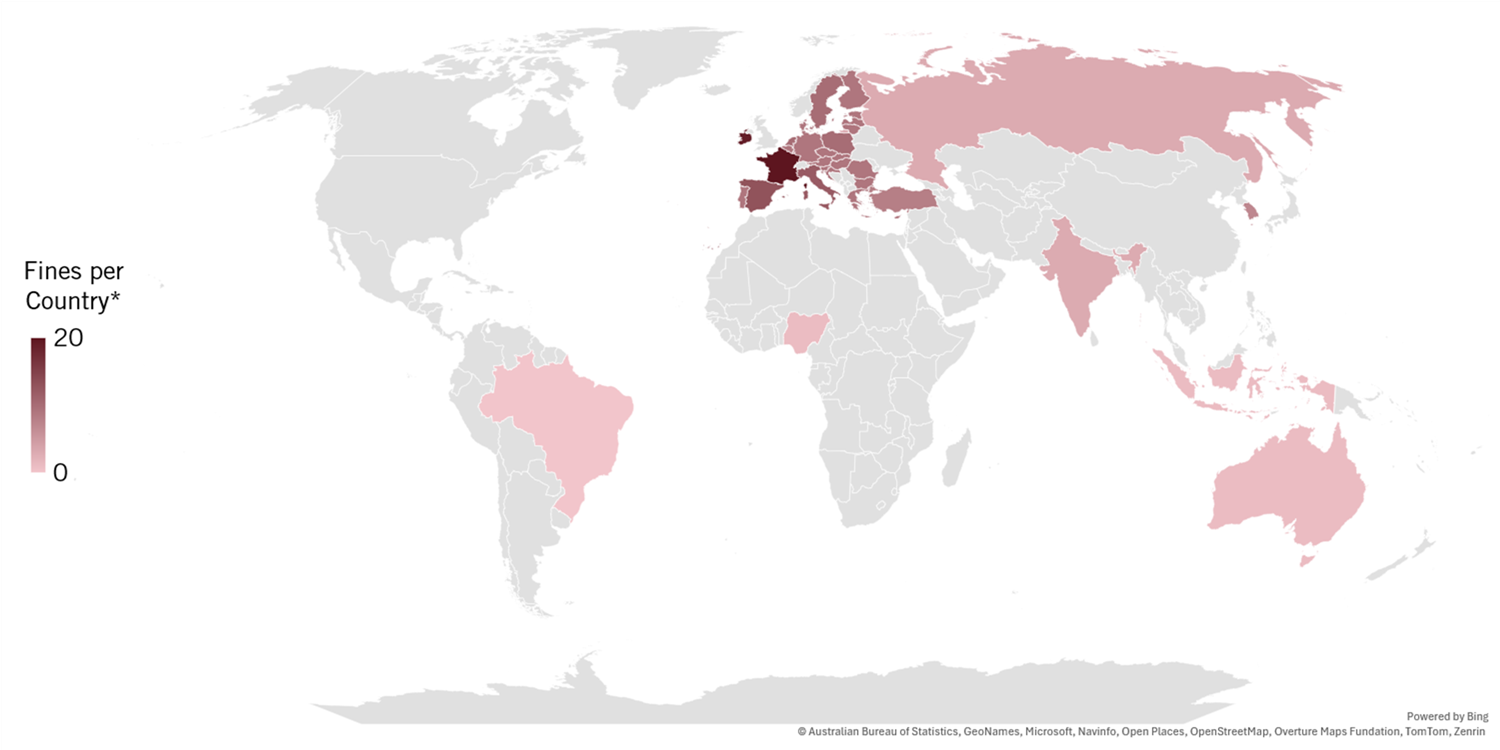
* For EU members, total fines include the number of EU fines plus the number of national fines.
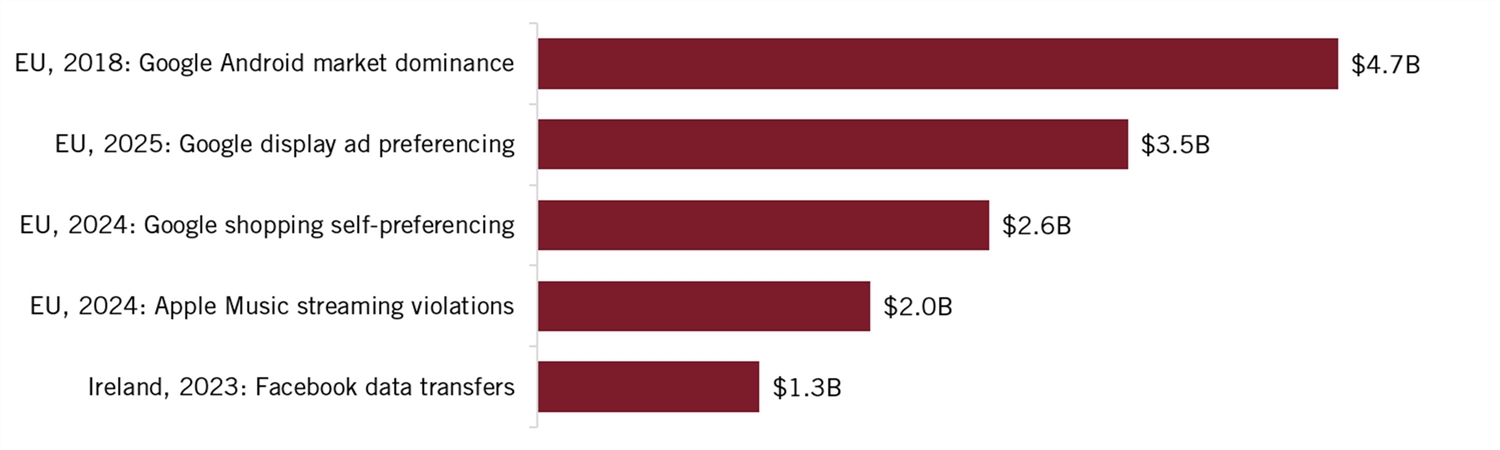
Because these fines are often calculated based on U.S. tech companies’ global revenues, not just the revenues they earn in the jurisdictions imposing the penalties, individual fines can be staggeringly large, as figure 5 shows.
Figure 5: Top five largest fines against U.S. tech companies as of July 2026
Methodology
ITIF has compiled a database of regulatory fines greater than $1 million that foreign governments have levied on U.S. tech firms since 2018. Data sources include primary records where possible, such as government agencies’ official announcements or records of regulatory enforcement actions, and secondary news reports when primary records are not available. Several existing databases have served as first points of reference in this research, including the GDPR Enforcement Tracker, Violation Tracker Global, GDPRfine.com, and the Data Privacy Enforcement Tracker.
In each case, ITIF records the original fine amount in the currency of the jurisdiction that has issued the fine. ITIF then calculates the U.S. dollar value of the fine based on the historical currency conversion rate on the date the fine was announced or first reported.
Companies often challenge fines. If a challenge results in a fine being withdrawn, then the fine is omitted from ITIF’s accounting. If a fine is reduced, then ITIF’s accounting uses the revised fine amount. The fine is booked in the year it was first announced, and its U.S. dollar value is calculated based on the currency conversion rate on the date of the final determination. Table 1 provides a condensed summary of all fines in the database that have been imposed on U.S. tech firms and not overturned.
