

Science and R&D
Navigate forward to interact with the calendar and select a date. Press the question mark key to get the keyboard shortcuts for changing dates.
Navigate backward to interact with the calendar and select a date. Press the question mark key to get the keyboard shortcuts for changing dates.
As nations engage in a race for global advantage in innovation, ITIF champions a new policy paradigm that ensures businesses and national economies can compete successfully by spurring public and private investment in foundational areas such as research, skills, and 21st century infrastructure. In the area of science and R&D policy, ITIF promotes public and private investment in research and development through public funding for research at national laboratories and universities, tax incentives to encourage business R&D, and policies to spur technology transfer from lab to market.


Executive Vice President, Global Innovation Policy
Information Technology and Innovation Foundation
Read Bio


Head of Policy, Centre for Canadian Innovation and Competitiveness
Information Technology and Innovation Foundation
Read BioFeatured
China Is Rapidly Becoming a Leading Innovator in Advanced Industries

There may be no more important question for the West’s competitive position in advanced industries than whether China is becoming a rival innovator. While the evidence suggests it hasn’t yet taken the overall lead, it has pulled ahead in certain areas, and in many others Chinese firms will likely equal or surpass Western firms within a decade or so.
Why Congress Should Restore Full Expensing for Investments in Equipment and Research and Development
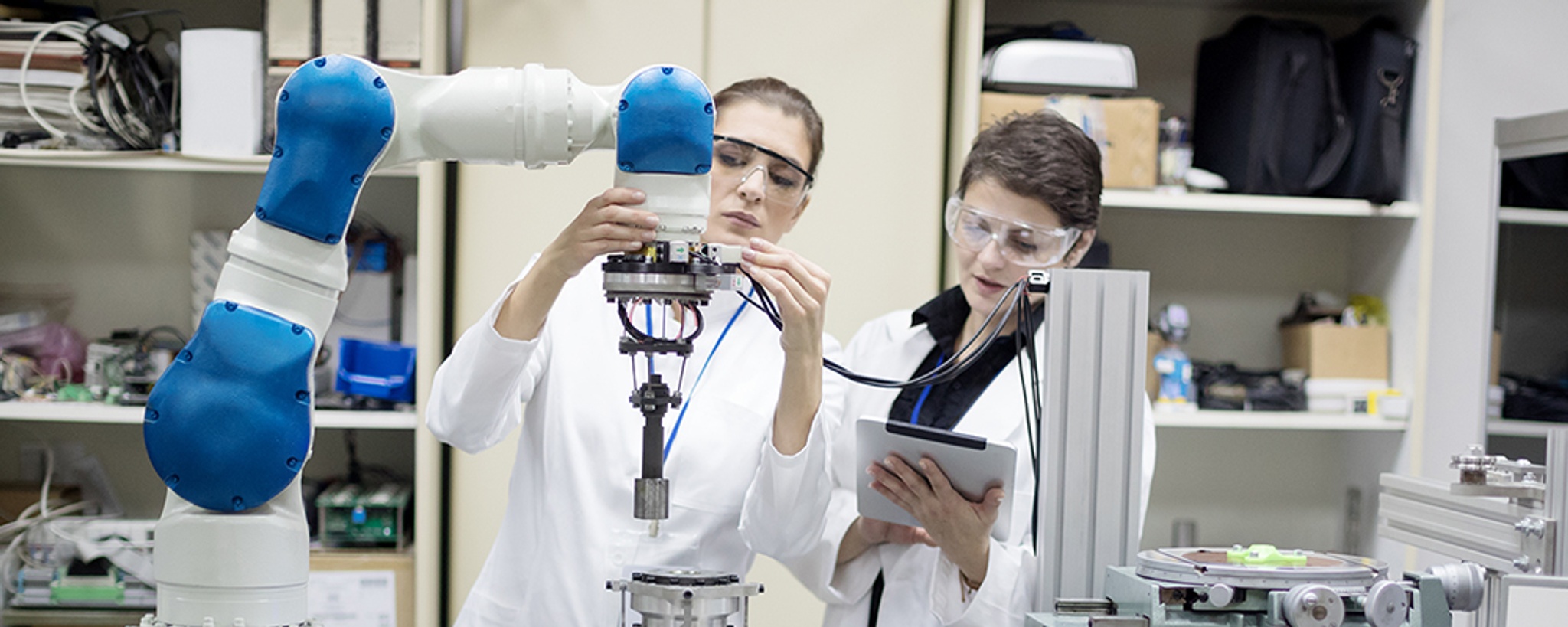
The tax law allowing firms to fully expense their research and development (R&D) costs expired at the end of 2021, and full expensing of equipment costs will begin phasing out in 2023. This decreases firms’ incentive to invest in these key drivers of economic growth and competitiveness. Congress should restore and make permanent full expensing for these investments.
More Publications and Events
September 22, 2026|Blogs
Congress Should Make the CHIPS Act’s Investment Tax Credit Permanent
The United States needs a strong domestic semiconductor manufacturing base to support economic growth, strengthen supply chains, and remain globally competitive. To sustain investment in new U.S. semiconductor facilities, policymakers should make the Advanced Manufacturing Investment Credit permanent.
September 8, 2026|Reports & Briefings
Transatlantic Subnational Innovation Competitiveness Index 3.0
For policymakers to bolster the global competitiveness and innovation capacity of their regions, they must first understand their regions’ strengths and weaknesses. This report—by 11 think tanks from the Global Trade and Innovation Policy Alliance (GTIPA)—benchmarks 213 regions of 13 transatlantic countries using 14 commonly available innovation indicators.
August 25, 2026|Blogs
America’s Competitive Advantage Depends on Retaining Scientific Talent
Recent changes to science and immigration policy are making scientists reconsider building their careers in the United States. To preserve America’s competitive advantage, policymakers should ensure stable federal research funding, protect merit-based peer review, and modernize high-skill immigration policy.
August 20, 2026|Events
Can the United States Retain Its Scientific Talent?
Watch now for an expert panel discussion on the growing challenge of retaining scientific talent in the United States. Panelists examined whether recent departures signal the beginning of a broader trend, what factors are driving scientists to leave, and which policies can help the United States retain top researchers and bolster innovation and economic competitiveness.
August 11, 2026|Blogs
China Isn’t Just Spending More on Innovation—It’s Getting Better at Innovation
China is not only investing more in innovation but also becoming better at turning those investments into technologies with commercial potential. To maintain its technological leadership, the United States should strengthen its entire innovation pipeline, from research to commercialization.
August 10, 2026|Blogs
Fact of the Week: Chinese Patents in Several Critical Technologies Are Closer to the Scientific Frontier Than Their US Competitors
Just four percent of Chinese critical technology patents were filed by state-owned enterprises or the government, while more than half were filed by private firms. Another 27 percent were filed by universities. In comparison, only 3.3 percent of all critical technology patents in the United States were filed by universities.
August 10, 2026|Blogs
The US Science System Needs Reform, Not Arbitrary Funding Cuts
Arbitrary funding cuts and increased political involvement in grantmaking will further weaken an already less productive U.S. science system. Policymakers should pursue reforms that enable researchers to generate more breakthroughs and strengthen U.S. competitiveness.
July 21, 2026|Testimonies & Filings
Testimony to the US Senate Subcommittee on Science, Manufacturing, and Competitiveness on “Measuring What Matters: Science, Standards, and Strategic Competition”
The utopian vision of globally integrated, democratic, free-market economies working together in harmony has not materialized. Meanwhile, the belief that China could not innovate—and that America would continue to lead in advanced technologies—also has proven to be false. These new realities require bold reforms in the U.S. research system.
July 20, 2026|Blogs
America Needs Both Small and Large Firms
Both small and large firms are essential to America’s innovation system because they specialize in different forms of innovation. Congress should double the regular R&D tax credit to 40 percent and reduce the red tape associated with claiming it.
July 20, 2026|Reports & Briefings
Commercializing Canadian Health Research: The Case for Targeting Grants and Increasing Overall Investment
Canada should significantly expand commercialization-focused grant programs through the Canadian Institutes of Health Research (CIHR) and increase Canada’s overall health science research investments to a scale commensurate with global competition.
