


Top 10 Tech Policy Pronouncements, Prognostications, and Questions for 2026
If the year ahead in technology and innovation policy lives up to its potential, it could be a consequential one because there is a long list of important issues on the table. In some cases, we have strong hunches about what could transpire. In others, we have strong preferences. And there are a few for which we have more questions than answers.
Not necessarily in rank order, here are 10 issues on the top of our minds:
1. Concede That Efforts to Limit and Break Up “Big Tech” Have Been Misguided
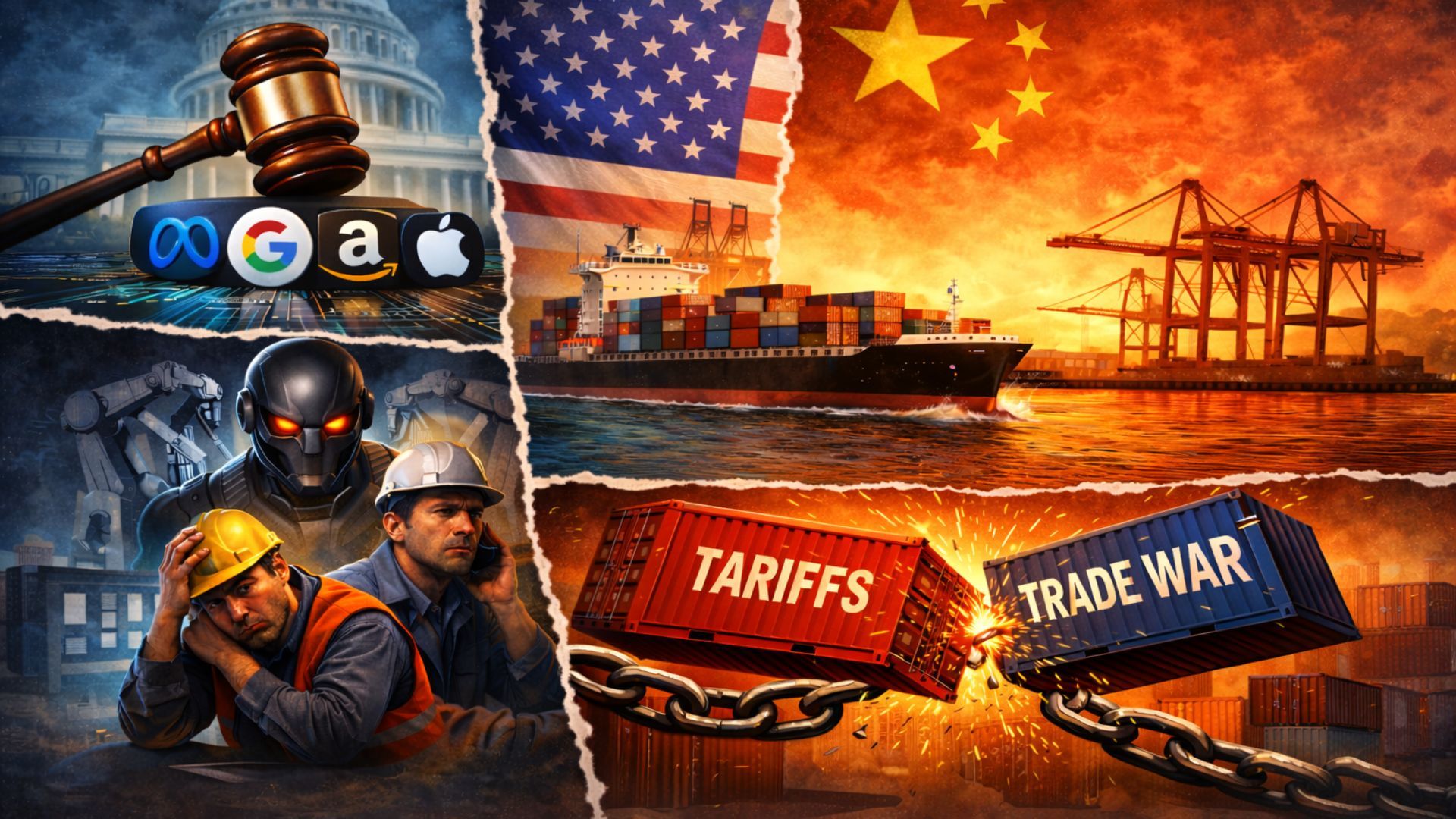
With Judge Mehta’s decision to reject the Justice Department’s demand for structural relief Google in the search case and the Federal Trade Commission’s landmark defeat against Meta handed down by Judge Boasberg, the neo-Brandeisian crusade to break-up Big Tech is effectively over. And nor was it ever well founded in the first place: Behavioral measures like those in the U.S. v. Microsoft case, which DOJ has praised, are more than sufficient to address any anticompetitive harms courts find.
2. The EU’s Anti-U.S. Tech Juggernaut Will Likely Continue
The EU has interpreted the Trump administration’s tough love as all toughness, no love. And despite the Draghi report warning the EU needs to be less regulatory, it’s hard to envision level heads prevailing in Europe, which in all likelihood will continue on its path of over-regulating every emerging technology it can find based on the precautionary principle, especially if doing so comes primarily at the expense of American companies.
3. Pass Important Tech Legislation
In an era of slim majorities and hyper-partisanship, Congress seems to have gotten out of the business of passing major bipartisan legislation. But when it comes to technology and innovation policy, there are some issues that should garner broad support, maybe lawmakers can accomplish some useful things in 2026, such as passing a baseline national privacy bill, preempting state AI rules, and high-skill immigration reform. But just because Congress should do something, doesn’t mean it will.
4. Move Past the Broadband Access Gap
2026 may be the year the United States closes the broadband access gap once and for all: With continued private investment, the growth of low-earth-orbit satellites, and BEAD money set to roll out, there should be no more deployment gaps in the United States and therefore no more need for subsidies to fill them. Meanwhile, leftover BEAD funds and USF reform should shift the focus to helping low-income Americans be able to afford broadband and develop digital skills.
5. Free Up More Spectrum
Modernize spectrum policy for productivity and global competitiveness: The United States needs to get more productive with wireless resources. That means making way for more commercial spectrum use by making outdated federal systems high-tech, and updating spectrum policy to account for a world of convergence that increasingly blurs the lines between terrestrial and satellite uses.
6. Turn the Corner on Cuts for Federal Support for Research for Universities
One can understand the frustration of the Trump administration with the shift to wokeness radicalism by many colleges and universities and the inclination to punish them. But cutting funds only cuts off our nose to spite their face. Appropriators need to step in and restore science research funding but with a new approach that so that more of that research addresses key national competitiveness challenges.
7. Accelerate AI Adoption
Given massive investments in AI, the level of maturity of the technology, and promises from tech executives, it is win or bust for AI. Companies and countries that successfully go all-in on AI will have an enormous advantage over their more hesitant peers. The United States needs a national AI adoption plan where policymakers can work hand-in-hand with industry to accelerate AI adoption by measuring uptake, addressing barriers, and developing the skills and infrastructure needed to be a global leader in AI.
8. America’s Anti-Tech Sentiment Will Likely Continue
Over the last 15 years or so, America has experienced a rising tide of opposition to technological innovation generally, “Big Tech” companies specifically, and now AI most of all. This anti-tech sentiment is so prevalent that it is now surprising to hear a thought leader or elected official say anything positive about digital technologies or the companies that make or provide them. That is a recipe for national stagnation. But alas, it is a trend that is likely to continue in 2026.
9. Will Trumpian Trade Pressure Recede and Enable Anti-China Partnerships?
The Trump administration’s frustration with many of America’s trading “partners” is real. Many nominally allied countries have put in place unfair trading practices that are particularly costly to the United States. But the overriding issue for America and its allies should be China and its campaign to dominate the advanced industries that underpin national power in the 21st century. The United States and the West will lose that techno-economic war if they do not maintain close partnerships among key allies. Time will tell whether the Trump administration tries to resolve outstanding trade disagreements with U.S. allies and shift the collective focus to China. But current evidence suggests counterproductive squabbling will continue.
10. Bet on Another Year Without an AI Job Apocalypse
Pundits and scholars have been telling us for years that the AI revolution will destroy jobs. They have been wrong to date. We predict they will be wrong again in 2026. Jobs lost to AI will be less than 5 percent of total jobs lost for all reasons.
Related
December 21, 2022
