


Better Regulation, Not More: Rethinking Korea’s Competition Policy for the Next Decade
With the appointment of Chairman Joo Byung-ki and a forthcoming reorganization, Korea’s Fair Trade Commission (KFTC) faces a pivotal moment. ITIF’s Center for Korean Innovation and Competitiveness convened a webinar with four leading experts to explore how the commission can balance regulation, innovation, and competitiveness across three areas: platform markets, corporate governance, and procedural reform.
Throughout the discussion, panelists emphasized the need for transparent and predictable enforcement that sustains market confidence and innovation. A full transcript of the event is available in Korean, and a summary follows. As the KFTC enters its fifth decade, it is clear its mission must evolve—from control to credibility, and from compliance to competitiveness.
Part 1. Platform Regulation—Between Fairness and Innovation
The session opened with a central question: “Should Korea establish a dedicated platform law, or should the KFTC pursue fairer digital-market outcomes through guidance and ex-post enforcement within existing statutes?”
Prof. Dae Sik Hong (Sogang University Law)
Hong cautioned strongly against copying Europe’s Digital Markets Act (DMA). “The EU adopted the DMA out of desperation,” he said, noting that Europe lacked domestic tech champions and needed an aggressive instrument to discipline U.S. giants. “Korea’s situation is entirely different. We already have globally competitive national platforms—this is not an ICU patient that needs radical treatment.”
|
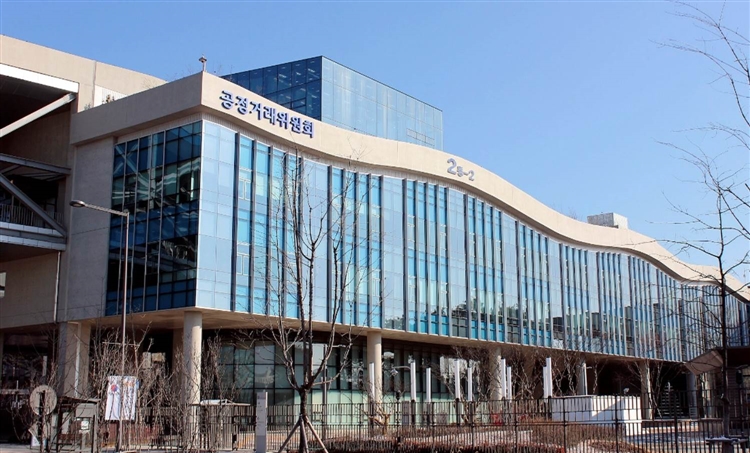
Korea Fair Trade Commission (Photo by Minseong Kim via Wikimedia Commons)
|
He stressed that the KFTC already possesses extensive powers under the Monopoly Regulation and Fair Trade Act (MRFTA) and its many derivative statutes governing subcontracting, franchising, and agency transactions. “Korea’s existing legal architecture already covers unfair-trade practices and transaction-fairness rules that the EU doesn’t even have,” he said. Creating another DMA-style act would duplicate those powers while adding complexity.
Instead, Hong urged regulators to refine current rules, clarify guidance, and let market-led compliance evolve. “If we rush to legislate,” he warned, “we’ll bury domestic innovators under compliance paperwork while U.S. and Chinese platforms keep expanding globally.”
Prof. Kyung-sin Park[1] (Korea University Law)
Park mentioned the Online Platform Fairness Act and Online Platform Monopoly Regulation Act now under discussion in the National Assembly as likely to have limited effectiveness. “Both bills lack sufficient research and social consensus to be legislated efficiently,” he said. “A list-based approach to regulating unfair conduct by platforms is unlikely to work in practice.”
Park of Korea University Law School cautioned against rushing new legislation that fails to consider the structural features of digital platforms.
“Platforms have very low entry barriers but strong network effects that naturally lead to concentration,” he explained. “Because users join platforms precisely to connect with others, these network effects generate clear consumer benefits. That is why it has always been difficult to apply traditional monopoly or competition-law principles directly to platform markets.”
He continued, “The key issue is not whether to create new laws, but whether we have the necessary empirical research and social consensus to make them effective. The current Platform Fairness Act and Platform Competition Promotion Act are being pushed forward without such groundwork. Both take a list-based approach to defining ‘unfair acts’ observed in existing platforms, but this method is unlikely to be effective.”
Park pointed to the 2021 In-App Payment Ban Act as a telling example. “It was passed, but had virtually no real impact,” he said. “Even without creating new laws, we can regulate platform conduct under the existing competition law—if we first establish a solid analytical foundation for its underlying principles.”
Attorney Hwijin Choi (Bae, Kim & Lee)
Choi began by questioning the very need for a new law dedicated to platform fairness. “I’m not convinced that we need a separate statute to regulate the fairness of intermediary platforms or delivery apps,” he said. “The Fair Trade Act already prohibits unfair trade practices, including abuse of superior bargaining position, and has done so effectively for many years.”
He explained that Korea already has multiple special laws that function as exceptions or extensions of the Fair Trade Act—such as the Subcontracting Act, Franchise Business Act, and Agency Transactions Act—each enacted under different circumstances but with slightly differing scopes and standards.
“These laws often overlap,” Choi noted. “For instance, when a transaction falls under the Agency Act, that law takes precedence. Yet because of regulatory gaps in certain enforcement notices, courts have recently ruled that some cases must instead be sanctioned under the Fair Trade Act. This shows how confusing the system already is.”
Because of this patchwork, firms face rising compliance burdens and uncertainty. Choi warned that another special law could increase regulatory overlap, inflate legal risk, and discourage business activity rather than promote fairness.
“A new law might temporarily patch policy gaps,” he said, “but it would likely create longer-term side effects—higher costs, redundant oversight, and hesitation among businesses to engage in mutually beneficial activities.”
He emphasized that regulation should not stifle win–win cooperation between platforms and their partner merchants. “There are many reasonable, mutually beneficial forms of collaboration that can improve consumer welfare,” he said. “Yet when companies fear legal exposure, they may simply stop trying.”
Choi gave an example: “Small and medium-sized firms use platforms as key distribution channels. If both sides agree to share marketing costs in a fair proportion, that can increase overall sales. But if regulations begin dictating transaction terms—such as setting statutory limits on commissions—there’s no guarantee such rules will lessen burdens on merchants, and they may even reduce benefits for consumers.”
He concluded that before crafting new rules, policymakers should carefully assess whether additional statutes truly serve fairness—or merely multiply complexity and compliance risk in an already crowded legal landscape.
Prof. Woojin Kim (Seoul National University Business School)
Kim broadened the discussion to Korea’s strategic competitiveness. “In a world where our firms compete with Google, Amazon, and Meta,” he said, “we cannot afford to regulate ourselves out of the race.” Korea, he reminded, is one of only four countries—alongside the U.S., China, and Russia—with a native-language search engine and major e-commerce player.
He agreed with Hong that Europe’s DMA was a protectionist, last-resort measure—a “drastic prescription” for an ailing digital sector. “Some even joke that Europe’s ESG agenda itself functions as a trade barrier,” Kim said. “Copy-and-paste regulation from that context would be misguided.”
Kim pointed to the 2024 Wemakeprice payment-default incident as evidence that systemic risks can emerge not from large incumbents but from smaller platforms lacking governance capacity. “Major big platforms like Naver, Kakao, and Coupang have actually improved co-existence with small businesses—shortening settlement cycles and building trust,” he said. “We should recognize those advances instead of penalizing scale.”
He urged regulators to adopt an industrial-policy lens, supporting domestic champions in the face of global competition rather than constraining them pre-emptively. “Over-regulation of our own firms will erode Korea’s position in AI-driven platform innovation.”
Moderator Summary
The panel converged on a size-neutral, ex-post enforcement approach emphasizing transparency, consistency, and evidence-based harm analysis—positioning the KFTC as a referee, not a controller.
Part 2. Corporate Governance—Re-defining the KFTC’s Role
The discussion then turned to the intersection of corporate law and competition policy. Korea now operates under dual oversight systems: judicial enforcement through the Commercial Act and administrative enforcement through the KFTC.
Prof. Woojin Kim
Kim noted that the KFTC had long played a vital role in protecting minority shareholders when civil remedies were underdeveloped.
“In the past, when private enforcement was weak, the Fair Trade Commission effectively acted as a ‘guardian of shareholders,’” he said. “But with recent amendments to the Commercial Act and the growing use of shareholder activism and civil litigation, investor protection should now be handled mainly through corporate and civil law. The KFTC should refocus on its core mission—addressing anticompetitive conduct.”
He added that the Commission’s current approach, which penalizes both parent and subsidiary firms in intra-group transactions and fails to distinguish between wholly and partially owned affiliates, often results in “double punishment” and should be reconsidered.
“The Fair Trade Act is an administrative regime, not a civil one,” Kim explained. “When firms treat it purely as regulation to avoid, rather than as a framework for shareholder fairness, its limits become clear. As Korea’s civil and corporate law remedies mature, the KFTC’s role should gradually narrow and concentrate on competition issues.”
Prof. Kyung-sin Park[2]
Competition law regulates the companies’ external conduct. Korea’s chaebol regulation targets the internal governance of those companies according to corporate law. I agree with Prof. Kim that the two laws have different goals.
In Korea, however, we empowered the country’s competition authority with the latter role as well because the chaebol-centered economy is hurting people too much. More importantly, the tools of enforcing the corporate law and its goal of separating management and ownership have been limited. Not much civil litigation. So limited that even civil society orgs such as PSPD led the minority shareholder movement.
Also, often, the owners’ self-profiteering take place simultaneously with the company’s self-preferencing, or the latter becomes the tool of the former. For instance, the affiliates benefitting from the parent company’s self-preferencing were often owned or managed by the parent company owner’s family members. If KFTC was effective on those dual violation cases, it could have reduced the chaebol’s governance abuse while focusing on the competition policy goals.
Attorney Hwijin Choi
Choi said, “Corporate internal governance is maturing—through more robust board deliberations, multi-layered external legal reviews, and heightened awareness of directors’ fiduciary duties. The KFTC’s role as an adjudicator may somewhat diminish, as alternative mechanisms that had not functioned effectively in the past are becoming more active. If these emerging systems can coexist and operate in harmony with the traditional KFTC-centered framework, they could create meaningful synergy.”
Prof. Dae Sik Hong
Hong reframed the debate as one of incentives. he said, “It is true that the KFTC has long intervened even in matters that should have been resolved through judicial processes, and I agree that its domain of intervention should now gradually be reduced.” He continued, “The KFTC’s current approach to regulating corporate group governance no longer fits today’s economic reality. IT companies have fundamentally different ownership and governance structures from traditional manufacturers, yet they are still subject to outdated, accounting-based regulations. As a result, Korea has seen little progress in developing more advanced or diversified corporate group models. If the purpose of corporate group regulation is to promote sound and desirable governance, the system should be complemented by incentive mechanisms that actually encourage such evolution.”
Moderator Summary
The debate illustrated the need for functional specialization: corporate law should address governance and shareholder issues, while the KFTC should focus on competitive effects and structural incentives.
Transparency and predictability in governance are the foundation of trust. Whether through courts or the KFTC, the objective must be to build credible, investor-friendly institutions that strengthen—not constrain—Korea’s global standing.
Part 3. Enforcement and Institutional Reform—From Control to Trust
The final session addressed persistent concerns from businesses about opaque procedures and overlapping investigations.
Prof. Dae Sik Hong
Hong called for institutional downsizing and clearer specialization within the KFTC. “The Commission tries to do everything—platform regulation, consumer protection, conglomerate oversight—and ends up overstretched,” he said. Staff rotations and performance incentives, he added, encourage quantity of investigations over procedural rigor.
He emphasized that due process and evidence-based fact-finding are the legal foundations of fair enforcement, yet these principles often suffer under the Commission’s workload. “Korea’s pursuit of both speed and fairness has become structurally incompatible,” he observed.
Hong proposed delegating routine fair-trade cases—such as franchise or local transaction disputes—to provincial authorities, allowing the KFTC to focus on systemic market-competition issues. He further recommended separating investigation and adjudication functions, citing the UK’s Competition and Markets Authority as a model for balanced institutional design.
“The KFTC should stop trying to act as a first-instance court,” Hong concluded. “It should make swift, clear administrative decisions, while an independent appeals body handles final judgment. Only then can the Commission focus on what it does best—ensuring competition, not managing everything.”
Attorney Hwijin Choi
Choi elaborated on recent procedural improvements within the KFTC’s investigative system — including restrictions on full-disk imaging during digital forensics, exclusion of compliance departments from on-site inspections, and more systematic cataloguing of evidence. He welcomed these changes as signs of progress toward procedural fairness but underscored that significant gaps remain.
“When the KFTC collects materials not only from investigated firms but also from third parties, it should manage and disclose them under a unified, transparent system,” he said. “Currently, only evidence favorable to the authority’s case tends to be catalogued, while other materials may be neglected.”
Choi argued that defendants’ access rights — such as viewing and copying case files — are still too limited, often denied on grounds of trade secrecy. “That undermines procedural balance,” he noted, calling for full transparency and standardized evidence disclosure in line with OECD due-process norms.
He also highlighted Korea’s lack of statutory attorney–client privilege, warning that it weakens compliance culture: “Without explicit privilege protection, companies hesitate to consult legal counsel proactively. We must embed legal certainty into compliance itself.”
Choi concluded that data seizure should be narrowly tailored and harm-linked, focusing on relevance rather than volume, to ensure that investigative rigor does not come at the expense of fairness.
Prof. Kyung-sin Park[3]
Park spotlighted weak private enforcement and excessive agency deference. He cited a case where the KFTC halted investigation of a telecom affiliate online shopping mall’s preferential zero-rating practice after seeking input from another ministry, the telecom regulator. “Specialized regulators often protect incumbents due to the long-time relationship between the companies and the regulator,” he said. “The KFTC must own its competition mandate, free from that relationship.” He noticed a similar weak enforcement case in the film industry where one company owns both theaters and film distributors.
He also called for stronger discovery rules, timely file access, and judicial review of evidence handling to strengthen trust in enforcement outcomes.
Prof. Woojin Kim
At a deeper level, Kim questioned whether the core mission of the Fair Trade Act—unchanged since the 1980s—still fits today’s economy. “The law’s purpose clause still speaks of preventing economic concentration,” he noted. “But does it truly benefit Korea if Samsung performs poorly? Over five million Koreans hold its shares, and its success boosts pension and national-fund returns.”
He argued that the guiding principle should no longer be dispersing economic power but preventing its abuse. “Our constitution prohibits abuse of economic power, not concentration itself,” he said. “Competition policy should evolve from restraining size to restraining abuse.”
Kim warned that Korea’s competition regime remains excessively punitive. “The Fair Trade Commission still relies too heavily on criminal referrals,” he said, “creating reputational and economic risks that far outweigh the actual harm.” He urged a shift toward civil remedies and proportional sanctions, aligning Korea’s enforcement model more closely with OECD practice.
He also welcomed the KFTC’s recent step to ease unfair-support scrutiny for wholly owned subsidiaries, calling it “a small but meaningful step toward economic rationality.”
Moderator’s Reflection
“Competition policy is not about punishing success; it’s about ensuring that antitrust rules and predictable enforcement of them drive innovation.”
The October 23 webinar underscored a shared conclusion: Korea’s next-generation competition policy must move beyond the question of ‘more or less regulation’ toward enforcing antitrust rules in a way that does not see size as a problem per se, is economically coherent, procedurally fair, and institutionally credible. For Korea’s KFTC, now marking its fifth decade, this is a moment to lead: from control to credibility, and from compliance to competitiveness.
Download the full transcript in Korean.
Endnotes
Editors’ Recommendations
Related
September 4, 2025
A Cautionary Briefing for Korea’s New KFTC Chair: Why Platform Regulation Needs a Rethink
March 7, 2025
