


Will Yesterday’s Announcement Satisfy the Radical Fringe?
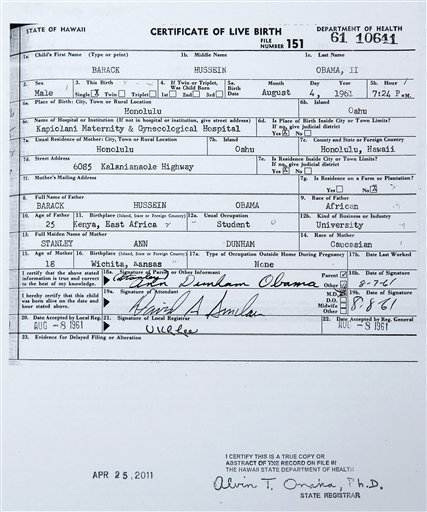
No, I’m not talking about President Obama’s revelation that like every other American he too has a birth certificate. I’m referring to Apple’s announcement yesterday morning that “Apple is not tracking the location of your iPhone. Apple has never done so and has no plans to ever do so.”
As I wrote two days ago, much of this so-called news was mostly a non-story from the start. The central claim—that “Apple” was tracking users—was never supported by any evidence. That did not stop a flurry of articles describing paranoid technology conspiracy theories that would have users believe that secretive governments and greedy corporations were plotting to invade user privacy for evil purposes. Nor did it stop journalists from lobbing accusations that Google and Microsoft were also inappropriately prying into the private data of its users (notably, without giving either much of an opportunity to respond—see some responses here and here). And of course, most of these articles and stories mostly ignored the overwhelmingly positive benefits of location-aware apps and services.
You might think that those who instigated this would perhaps show a bit of humility or contriteness now. Yet today, the Trump O’Reilly investigators say “At this point we're just relieved to get an explanation” and “people can…decide for themselves.”
Just as birthers will not let facts or reason interfere with their beliefs, neither will privacy fundamentalists admit when a privacy fear is overblown. As the President concluded yesterday, “I know that there’s going to be a segment of people for which, no matter what we put out, this issue will not be put to rest. But I’m speaking to the vast majority of the American people, as well as to the press. We do not have time for this kind of silliness. We’ve got better stuff to do.” Steve Jobs should know that no matter what Apples says when it testifies to Congress, many will simply refuse to believe.
Are there some serious concerns about location privacy? Of course. New sources of data present complex challenges and opportunities that organizations will continue to address in myriad ways. But a look at the facts shows this it isn’t quite scandalous enough to have earned the “LocationGate” or “iSpy” moniker thrown around in the press. The time and energy wasted on this story have distracted policymakers from developing a serious understanding of the important uses of data, how to best protect users, and how to continue to grow our information economy. And it has added more fuel to the fire of the rising anti-technology Ludditism that is emerging in America. As the President said yesterday, we need to have serious debates to address complex issues. But as he also said, “We’re not going to be able to do it if we just make stuff up and pretend that facts are not facts. We’re not going to be able to solve our problems if we get distracted by sideshows and carnival barkers.”
Editors’ Recommendations
January 12, 2015
Barack Obama Presses Privacy, Data Breach Agenda Post-Sony
December 26, 2014
Who Governs the Online World?
December 19, 2014
