

Skills and Future of Work
Navigate forward to interact with the calendar and select a date. Press the question mark key to get the keyboard shortcuts for changing dates.
Navigate backward to interact with the calendar and select a date. Press the question mark key to get the keyboard shortcuts for changing dates.
As nations engage in a race for global advantage in innovation, ITIF champions a new policy paradigm that ensures businesses and national economies can compete successfully by spurring public and private investment in foundational areas such as research, skills, and 21st century infrastructure. Our research on skills and the future of work covers skill-building through science, technology, engineering, and math education; use of technology in primary and secondary school; higher education reform; innovations such as massive open online courses; and incumbent worker-training policies.


Executive Vice President, Global Innovation Policy
Information Technology and Innovation Foundation
Read BioFeatured
@Work Series: Employment in the Innovation Economy
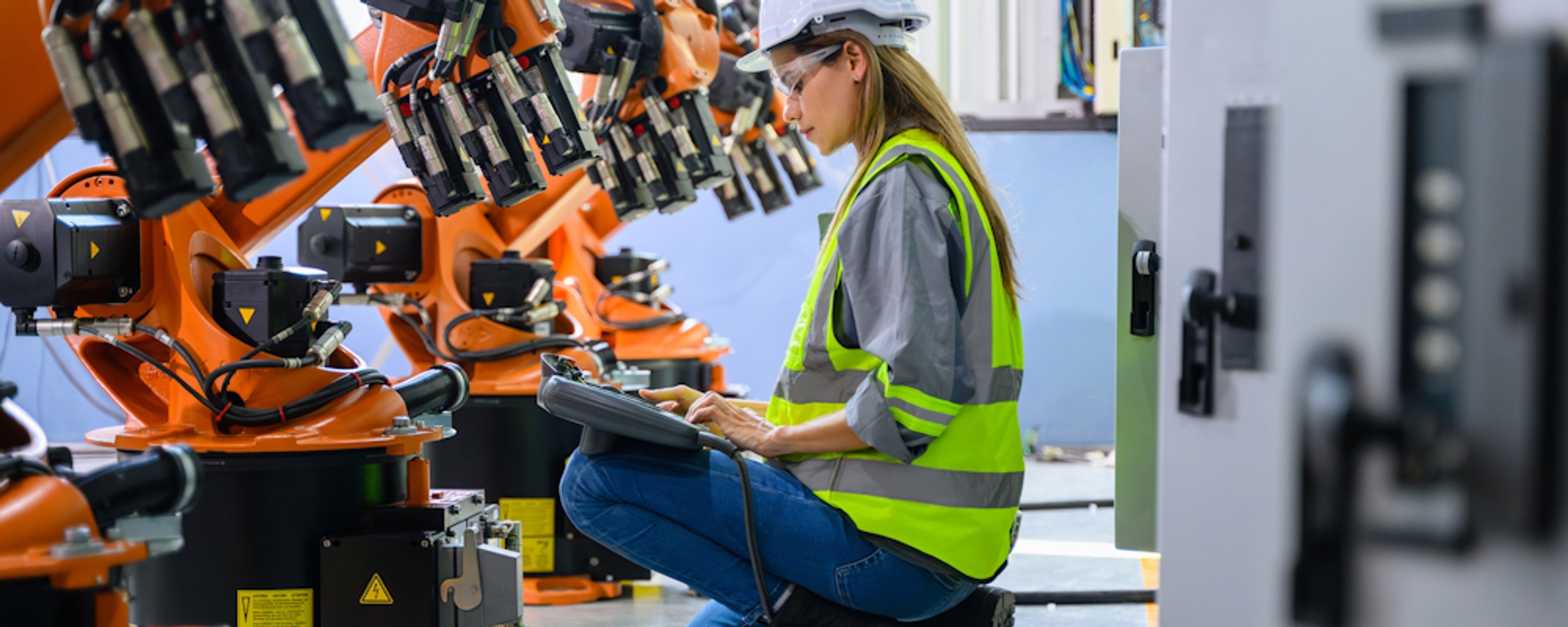
ITIF’s @Work series is dedicated to demystifying and demythologizing these issues and proposing necessary, actionable policy responses.
More Publications and Events
October 28, 2026|Events
Immersive Technology in the Classroom: Making Sense of Immersive XR in Education
Join the XR Association (XRA) and ITIF for a webinar discussing the real-world impact of immersive technology on teaching and learning—including how extended reality can deliver value for institutions, educators, and students.
October 26, 2026|Blogs
Fact of the Week: U.S. Science and Engineering Doctorates Increased 13.6 Percent From 2015 to 2025
According to the National Science Foundation’s Survey of Earned Doctorates, the number of science and engineering research doctorates awarded by U.S. universities increased 13.6 percent, from 41,247 in 2015 to 46,876 in 2025.
October 22, 2026|Blogs
America Trains the World’s Best STEM Talent. Why Make Them Leave?
Policymakers should withdraw the proposed $70,000 Optional Practical Training fee and pursue targeted reforms that address fraud without driving away the scientists and engineers the United States needs.
October 8, 2026|Blogs
Techno-Doom Panics Are Wired Into Our Brains
Our brains are wired to react to uncertainty with fear before reason catches up. However, giving in to techno-doom panics is bad for humanity.
September 14, 2026|Blogs
Fact of the Week: H-1B Immigration Raised Native Non-STEM Workers’ Incomes by About 15 Percent in Computer Systems Design
A 1 percentage point increase in an industry’s exposure to H-1B workers raises the long-run income of college-educated native workers in non-STEM occupations by about a 1.21 percent increase. In Computer Systems Design, the industry most exposed to H-1B immigration, this translates into an approximately 15 percent increase in long-run income for native non-STEM workers.
August 25, 2026|Blogs
The False Panic Over Workers’ Declining Share of Income
Misleading interpretations of federal data have fueled claims that economic gains are increasingly flowing to shareholders. But when evaluating who benefits from economic growth, wages and salaries are only one component of national income.
August 20, 2026|Blogs
Getting AI’s Workforce Impact Right Starts With Better Data
Debate over AI’s workforce impact focuses too narrowly on whether it creates or eliminates jobs. Rather than impose new reporting requirements on businesses, policymakers should commission studies and expand existing surveys to capture how AI transforms work, not just changes in headcount.
August 18, 2026|Blogs
US Manufacturing Employment Is Growing Faster Than Output—That’s a Problem
The United States is becoming less productive in manufacturing, even as productivity rises across nontraded sectors. To maintain U.S. industrial leadership, policymakers should incentivize manufacturers to adopt productivity-enhancing technologies.
August 14, 2026|Blogs
Labor-Displacing Technology Is Good for Labor
Labor-displacing technology can cause temporary pain, but that reflects progress. Suppressing it won’t protect workers; it’ll sacrifice productivity and growth.
July 13, 2026|Blogs
Universities Must Rethink AI Education for the AI Economy
As employers increasingly seek workers who can apply AI alongside domain expertise, universities should integrate AI across disciplines—not just standalone AI or computer science programs—to prepare graduates for the modern workforce.
