


Center for Data Innovation
ITIF’s Center for Data Innovation formulates and promotes pragmatic public policies designed to maximize the benefits of data-driven innovation in the public and private sectors. It educates policymakers and the public about the opportunities and challenges associated with data, as well as technology trends such as open data, artificial intelligence, and the Internet of Things. For more, get the Center’s weekly emails and visit datainnovation.org.
Featured Publications
Picking the Right Policy Solutions for AI Concerns
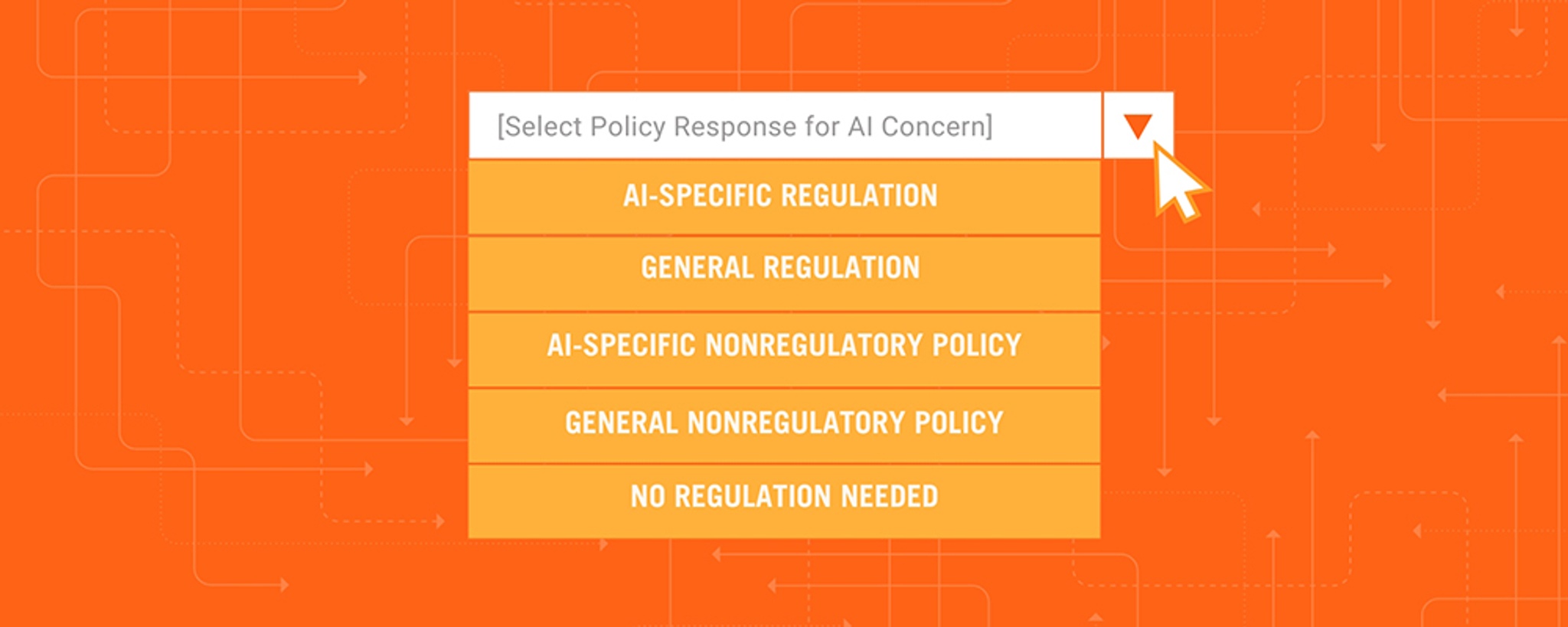
Some concerns are legitimate, but others are not. Some require immediate regulatory responses, but many do not. And a few require regulations addressing AI specifically, but most do not.
Five Concerns About AI Data Centers, and What to Do About Them

If the policy framework is right, AI infrastructure can strengthen the electricity grid rather than strain it, stabilize prices rather than inflate them, and transform heat and flexible demand into system assets.
How Rules for Publicly Available Data Are Shaping the Future of AI

To protect individuals while preserving the open information ecosystem that supports innovation, policymakers should focus on outputs rather than training inputs, encourage transparency norms for autonomous AI agents, and create a safe harbor for responsible use of publicly available data.
Public Sector AI Adoption Index

Governments are entering a critical phase in the adoption of AI. It is already contributing to everyday public sector work, and the question is no longer whether to adopt AI, but how to do so both effectively and responsibly. The Public Sector AI Adoption Index 2026 focuses on the human side of AI adoption, examining how it is experienced by public servants every day.
How the Brussels Effect Hinders Innovation in the Global South

Mandatory adoption of EU-style digital rules amounts to regulatory imperialism for many countries in the Global South. It limits technology adoption, raises compliance costs, and undermines the ability of local firms to compete with Western ones.
How Data-Rich Workplaces Can Improve Worker Safety, Health, and Experience
A productive approach to emerging workplace technologies would focus on two overarching goals: 1) accelerating development, testing, and adoption, and 2) supporting positive uses of the technology while mitigating negative ones.
Events
January 20, 2026
Advancing Multilateral AI Partnerships: A Pre-Summit Event for 2026 AI Impact Summit
Ahead of the 2026 AI Impact Summit in New Delhi, the Center for Data Innovation and The Dialogue are convening an official pre-summit event, sponsored by Google, in Washington, D.C., on January 20, 2026.
November 20, 2025
Improving Workplaces With Data and Technology
Watch now for a panel discussion on how data and technology can create safer, healthier, and more productive workplaces, and the policies needed to encourage adoption while protecting workers.
September 16, 2025
What It Will Take to Bring the Global South into the US AI Alliance
Watch ITIF's Center for Data Innovation discussion on how the United States can build a durable AI alliance that creates strategic partnerships that are mutually beneficial and contains China’s growing technological influence in the Global South.
May 13, 2025
How Americans Feel About AI—and Why It Matters for Policy
Watch now for a timely discussion by ITIF's Center for Data Innovation and Public First surrounding new polling data exploring how U.S. public sentiment toward AI is evolving. The conversation unpacks where Americans see promise or peril, how their views have shifted over the past year, and what these perspectives mean for lawmakers, business leaders, and the future of AI policy.
April 17, 2025
Is U.S. Policy Ready for Agentic AI?
Watch now for a panel discussion by ITIF's Center for Data Innovation on what the rise of agentic AI means for innovation, competition, and policy, how prepared the United States is to keep pace, and what policy shifts might be needed to ensure consumers and businesses can successfully develop and deploy AI agents.


More From the Center
September 30, 2026|Blogs
Europe Should Double Down on Its Open-Source AI Bet
Europe cannot match the United States and China in closed AI models, but it has an opportunity to lead in open models. The EU should remove regulatory and procurement barriers and foster a global open-model ecosystem.
September 29, 2026|Blogs
Democrats Should Treat Data Centers Like Clean Energy
Democrats should approach data centers as they have clean-energy infrastructure: take legitimate local concerns seriously and mitigate their impacts without allowing opposition to become a blanket rejection of development. As AI drives growing demand for data centers, policymakers should balance community protections with the economic, technological, and clean-energy benefits these investments can provide.
September 18, 2026|Blogs
AI Kill Switches Won’t Solve the Rogue AI Problem
As AI systems gain greater autonomy, policymakers should prioritize research and safeguards that make dangerous behavior harder to initiate, easier to detect, and faster to contain. Emergency shutdown capabilities can be one useful tool in that effort, but a government‑mandated kill switch is neither universally feasible nor sufficient to address the broader challenges posed by autonomous AI.
September 17, 2026|Op-Eds & Contributed Articles
Don’t Sacrifice American Capitalism to AI Anxiety
In an op-ed for National Review, President Daniel Castro argues that the United States should address specific AI risks without sacrificing the economic freedom, competition, and market-driven innovation that give America an edge over China in the global AI race.
September 16, 2026|Blogs
The Case for Safer AI Without Slowing Progress
AI presents real risks that warrant serious investment in security, testing, monitoring, and accountability, but claims that it poses an imminent existential threat lack a clear empirical basis. Rather than slowing AI development, policymakers should focus on evidence-based safeguards that make increasingly capable AI systems safer and more reliable.
September 7, 2026|Blogs
What Communities Stand to Lose by Blocking Data Centers
Data centers can deliver substantial tax revenue, jobs, infrastructure investment, and lower utility costs when communities adopt policies that capture their benefits while managing local impacts.
September 1, 2026|Blogs
America Is Building AI Guardrails, But Where Is the Road Forward?
The United States will not realize the full benefits of AI if policymakers treat it primarily as a technology that needs to be constrained.
