

ITIF

Mobilizing for Techno-Economic War, Part 3: Transforming Financial Capitalism Into National Power Capitalism
To avoid losing the techno-economic trade war with China, U.S. policymakers must rewrite the social contract at the heart of America’s 50-year-old system of financial capitalism by rebalancing the incentives to drive long-term investments in U.S. national power industries.

The Promise of Wearable AI: Opportunities Across Emergency Response
Wearable AI improves safety and outcomes for both first responders and the public they serve. Broader adoption of wearable AI for the emergency services industry will protect the health of first responders, improve emergency response, and create safer communities.

Five Concerns About AI Data Centers, and What to Do About Them
If the policy framework is right, AI infrastructure can strengthen the electricity grid rather than strain it, stabilize prices rather than inflate them, and transform heat and flexible demand into system assets.
The Global Trade Battleground: US-China Competition in the Global South
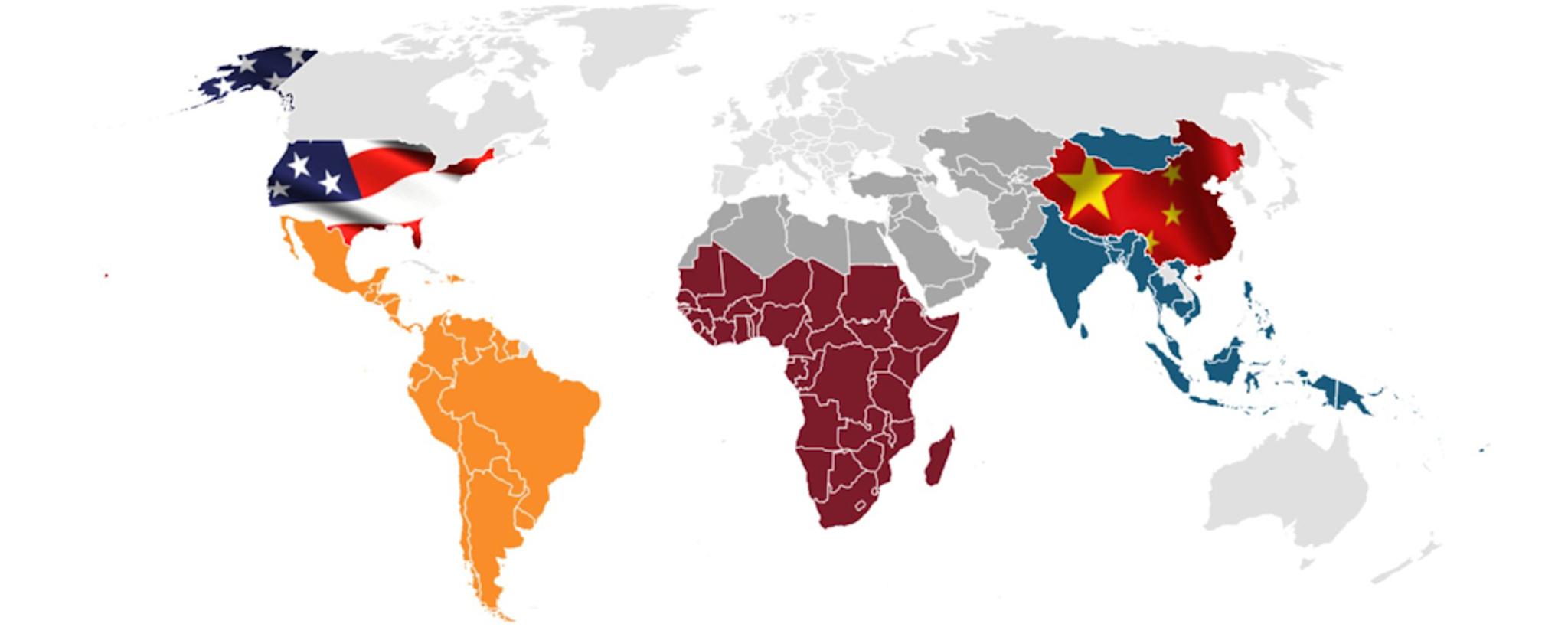
Countries in the Global South are key markets for Chinese and U.S.-allied national power industries, which require scale economies to flourish. U.S. policymakers should stop viewing them as a “backyard” and recognize that they are a key battlefield in an industrial war.
Mobilizing for Techno-Economic War, Part 2: Slowing China’s Advance

Boosting U.S. competitiveness in national power industries is necessary, but not sufficient to avoid losing to China. America also must take measures to slow the PRC’s progress toward global dominance. This report provides more than 100 actionable recommendations for the administration and Congress. Western allies should take many of the same steps.
Antitrust Undone: How Competition Enforcers Are Undermining Competition

Refashioning U.S. antitrust in the mold of the EU’s weaker probative burdens and categorical prohibitions would adversely impact U.S. global competitiveness and innovative dynamism, particularly in the tech ecosystem.
Assessing the Evolving Global Competitiveness of the US Auto Industry

To win the techno-economic competition with China, America must be able to assess the factors impacting the global competitiveness of its advanced-technology industries. Using the auto industry as a template, U.S. competitiveness has faltered considerably.
Reforming Canada Post for a Lower-Volume Era

Canada Post’s cost structure no longer scales in a low-volume world. Labour flexibility, automation, work sharing, retail consolidation, and parcel growth are necessary to reduce the cost of reaching every address while preserving universal service.
Lessons From Europe’s Loss of Biopharma Leadership, and Its Attempts to Recover

Europe once led the world in biopharmaceutical innovation, but it lost ground after adopting policies that weakened incentives for R&D and innovation. America must learn from Europe’s experience to preserve its own biopharma leadership and the related economic benefits and access to the most innovative drugs.
Leveraging Innovation to Improve Alzheimer’s Diagnosis and Care in Rural America

Rural communities face structural barriers to diagnosing Alzheimer’s early, which increases burdens on patients and caregivers while raising health-care costs. Policymakers should address the problem by expanding provider training and accelerating scalable diagnostic technologies.
Assessing the Clout of US National Power Industries vs. China

A select group of advanced, globally traded industries serves as the bedrock of U.S. technological leadership, economic power, and national security. Policymakers need to closely monitor the relative strength and vulnerability of its production capabilities.
How Rules for Publicly Available Data Are Shaping the Future of AI

To protect individuals while preserving the open information ecosystem that supports innovation, policymakers should focus on outputs rather than training inputs, encourage transparency norms for autonomous AI agents, and create a safe harbor for responsible use of publicly available data.
The Alarming Performance of US Advanced Technology Product Trade

Over the last decade, U.S. trade performance has deteriorated significantly in advanced industries. That is a major problem because these industries have high fixed costs and require substantial investments in R&D, so they depend on large customer bases to achieve scale economies and remain globally competitive.
Internal Value Chains Remain Dependent on China Even as Multinationals Shift Production to America

Advanced manufacturers based in East Asia are expanding investment into the U.S. economy. Yet, many of their internal value chains remain anchored in China, giving the PRC significant leverage over U.S. interests. U.S. policymakers should respond both defensively and offensively.
Marshaling National Power Industries to Preserve America’s Strength and Thwart China’s Bid for Global Dominance

China is on the march to dominate advanced industries that underpin national power in the 21st century. To protect U.S. economic strength and national security, policymakers must jettison old techno-economic and trade policy doctrines and adopt a new national power industry strategy.
The Digital Marriage Divide: Ranking States’ Online Services for Tying the Knot

States have moved many public services online, but the legal steps to get married remain largely paper-based. Modernizing marriage licensing, recording, and certificates would reduce costs, save time, and make the major life event easier for American families.
Tracking R&D Leadership: US Advantage Narrowing as China Gains Ground

Maintaining R&D leadership in advanced industries is critical to U.S. economic competitiveness and national power. But on a size- and wage-adjusted basis, China is rapidly gaining ground. Congress needs to boost corporate R&D incentives to prevent America from falling behind.
Mobilizing for Techno-Economic War, Part 1: The Case for Policy Transformation

The United States is at serious risk of becoming dependent on China for a wide array of key technologies and products, which would significantly shift the global balance of techno-economic power. Only fundamental policy change can potentially keep the United States from defeat.
US National Power Industries Are at Risk

Instead of treating manufacturing as a monolith to be revived, policymakers must focus on national power industries. These industries protect U.S. national defense and economic security, and are eroding at an alarming rate.
Public Sector AI Adoption Index

Governments are entering a critical phase in the adoption of AI. It is already contributing to everyday public sector work, and the question is no longer whether to adopt AI, but how to do so both effectively and responsibly. The Public Sector AI Adoption Index 2026 focuses on the human side of AI adoption, examining how it is experienced by public servants every day.
How the Brussels Effect Hinders Innovation in the Global South

Mandatory adoption of EU-style digital rules amounts to regulatory imperialism for many countries in the Global South. It limits technology adoption, raises compliance costs, and undermines the ability of local firms to compete with Western ones.
Policy Reforms to Launch US Space Innovation

Competitiveness in the global space economy should be a priority for the United States, but ineffective regulations weigh down the American commercial space industry. While last year’s executive order was a good start, additional regulatory reforms are necessary to address key roadblocks to U.S. space capabilities.
Mapping Industrial Strength: US Machine Tool Production and Consumption

Machine tools are key to and indicative of the health of a nation’s manufacturing sector. The United States lags behind in both the production and consumption of machine tools, especially compared with other high-wage economies.
Defending American Tech in Global Markets

“Non-tariff attacks” on U.S. tech companies are not just tax and regulatory hurdles—they are also eroding America’s strategic edge. Washington must identify, deter, and counter these measures in order to prevent ceding U.S. technology leadership to other nations.
How NIH-Funded Science Supports US Biopharmaceutical Innovation

NIH-funded research supports the foundation for industry to develop vaccines and therapies, exemplifying deep public-private R&D complementarity. As global competition intensifies, expanding NIH funding will be key to protecting American health, supporting U.S. biopharmaceutical competitiveness, and ensuring national power and security.
The United States Needs Data Centers, and Data Centers Need Energy, but That Is Not Necessarily a Problem

Electricity demand is growing rapidly and starting to strain the grid. Instead of slowing the growth of data centers, the United States should deploy new technologies and strategies to efficiently increase grid capacity while accelerating new generation and transmission.
